Art Work Persons Name in the Center With Things That Makes the Unique Surrounding the Name

The nigh famous artists of all fourth dimension
From painting to sculpture, the about famous artists of all fourth dimension have created the nigh iconic works in fine art history

How do you choose the nigh famous artists of all time? Art tin be difficult to define in the commencement place, maybe it's in the eye of the beholder, merely there is a general consensus which artists have made (and are currently making) a lasting impact on their respective mediums. Whether you're an art lover or non, you should know these artists for their achievements and their famous works of art. From iconic paintings to famous sculptures, these artists take produced works that stand the exam of time.
The works of many of these famous artists tin be seen at museums around New York, like The Met, MoMA and the Guggenheim. Information technology's an amazing experience when y'all run across a work of art past Da Vinci, Degas, Warhol, Pollak or Kusama in person. If y'all're inspired by this list of amazing artists, explore the best art galleries in NYC to see artists who are on their manner to becoming famous or take an art course and you might discover a talented creative person within.
Most famous artists of all time
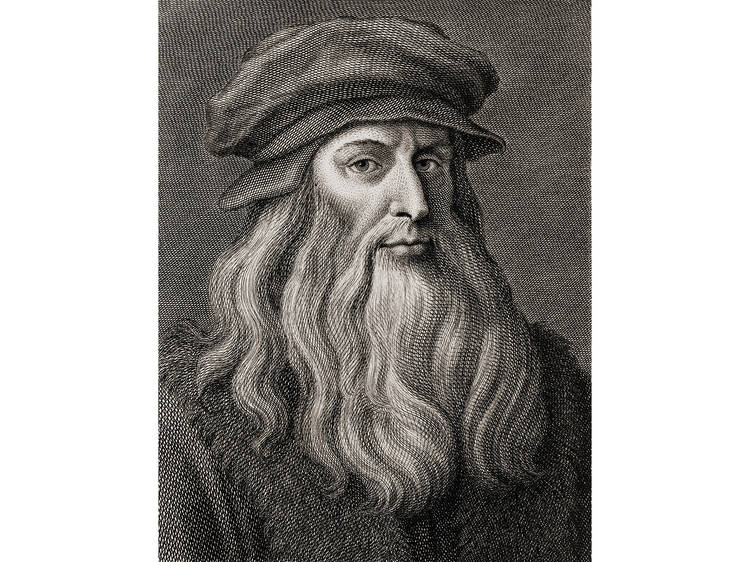
1. Leonardo da Vinci
The original Renaissance Man, Leonardo is identified with genius, not only for masterpieces such as the Mona Lisa (the title for which has entered the language as a meridian), The Last Supper and The Lady with an Ermine, just also for his drawings of technologies (shipping, tanks, automobile) that were five hundred years in the futurity.
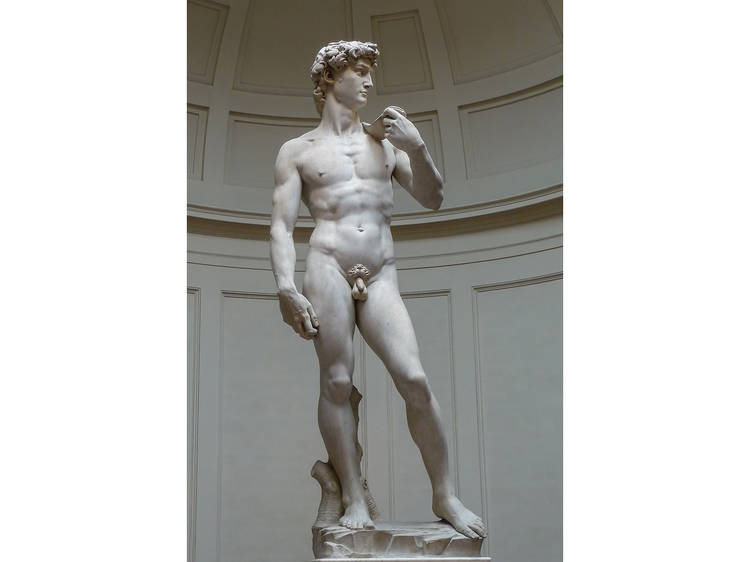
2. Michelangelo
Michelangelo was a triple threat: A painter (the Sistine Ceiling), a sculptor (the David and Pietà) and builder (St. Peter'south Basilica in Rome). Make that a quadruple threat since he also wrote poetry. Though he bounced betwixt Florence, Bologna and Venice, his greatest commissions were for the Medici Popes (including Julian Two and Leo Ten, among others) in Rome. Aside from the aforementioned Sistine Ceiling, St. Peter'due south Basilica and Pietà, there was his tomb for Pope Julian Two (which includes his iconic carving of Moses) and the design for the Laurentian Library at at San Lorenzo'southward Church. Xx years after painting the Sistine Ceiling, he returned to the Chapel to create 1 of the greatest frescoes of the Renaissance: The Last Judgment.
Michelangelo's David, 1501-1504, Galleria dell'Accademia (Florence)
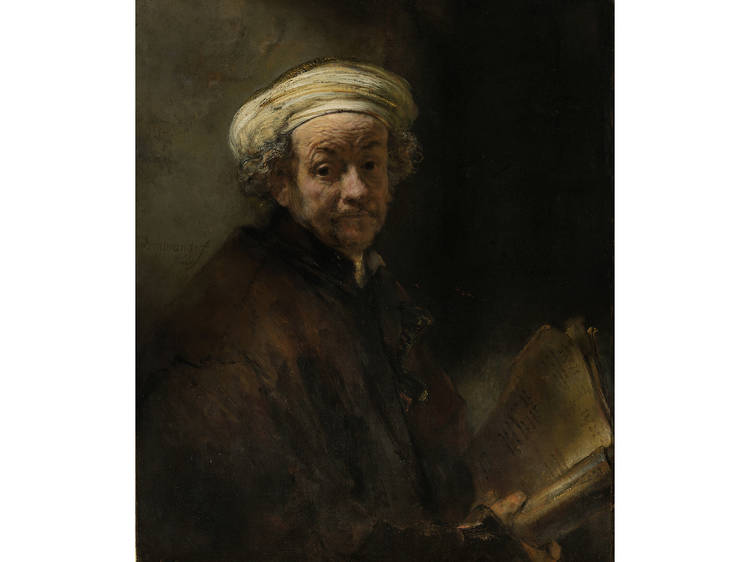
3. Rembrandt
One the greatest artists in history, this Dutch Master is responsible for masterworks such as The Night Sentry and Medico Nicolaes Tulp'due south Demonstration of the Beefcake of the Arm. Just he is particularly know for portraits in which he demonstrated an uncanny ability to evoke the innermost thoughts of his subjects (including himself through the play of facial expression and the fall of calorie-free beyond the sitter's features.
Rembrandt van Rijn, Self Portrait as the Campaigner Paul, 1661

4. Vermeer
Remarkably, Vermeer was largely forgotten for 2 centuries earlier his rediscovery in the 19th century. Since so, he'southward been recognized as one of art history's most of import figures, an creative person capable of rendering works of uncanny beauty. Many have argued the Vermeer used a camera obscura—an early grade of projector—and certainly the soft mistiness he employs appears to foreshadow photorealism. But the almost important aspect of his work is how it represents light as a tangible substance.
Johannes Vermeer, Het meisje met de parel (Girl with a Pearl Earring), 1665

5. Jean-Antoine Watteau
Watteau (1684–1721) was arguably the greatest French painter of the 18th-century, a transitional figure between Baroque art and the Roccoco style that followed. He emphasized color and motility, structuring his compositions so that they nigh resembled theater scenes, only it was the atmospheric quality of his work that would go highly influential for artists like J.M.W Turner and the Impressionists.
Jean-Antoine Watteau, The Shop Sign of Gersaint, (1720–21)

6. Eugene Delacroix
Eugène Delacroix (1798–1863) was one of towering figures of 19th-century fine art. A leading figure of Romanticism—which privileged emotions over rationalism—Delacroix'south expressive paint handling and use of color laid the foundation for successive advanced movements of the 1800s and beyond.
Eugene Delacroix, Self-Portrait with Dark-green Vest, ca. 1837
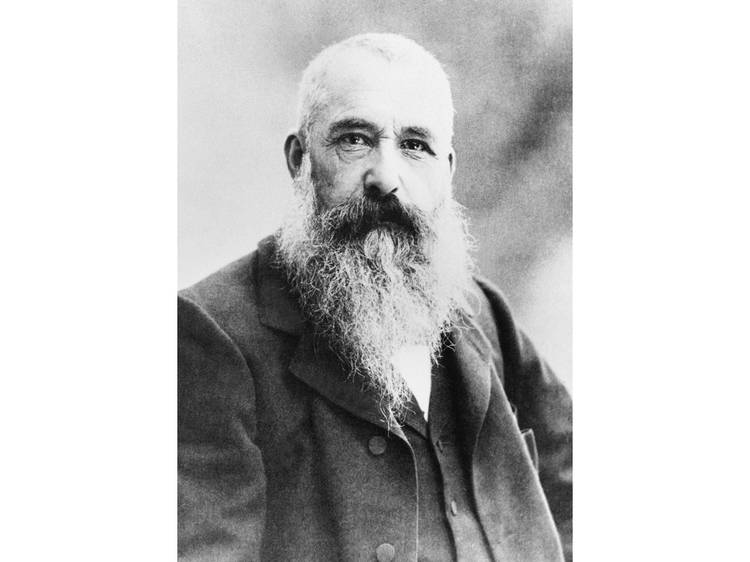
7. Claude Monet
Mayhap the best know artist among the Impressionists, Monet captured the changeable effects of low-cal on the landscape through prismatic shards of colour delivered as rapidly painted strokes. Moreover, his multiple studies of haystacks and other subjects anticipated the utilize of series imagery in Pop Fine art and Minimalism. But the aforementioned token, his magisterial, tardily-career lily pond paintings foreshadowed Abstract Expressionism and Color-Field Abstaction.
Claude Monet, 1901

viii. Georges Seurat
Nearly people know Georges Seurat (1859–1891) as the inventor of pointillism (which he actually developed with the creative person Paul Signac), a radical painting technique in which small daubs of color where practical to the canvas, leaving information technology to the viewer's eye to resolve those dots and dashes into images. Just as importantly, Seurat broke with the capture-the-moment approach of other Impressionists, going instead for ordered compositional style that recalled the stillness of classical art.
Georges Seurat, A Sunday Afternoon on the Island of La Grande Jatte, 1884–1886

9. Vincent van Gogh
Van Gogh is legendary for being mentally unstable (he did, after all, cut of office of his ear later on an statement with fellow painter Paul Gauguin), simply his paintings are among the most famous and beloved of all time. (His painting, The Starry Night, inspired a treacly Height twoscore hit past Don McClean.) Van Gogh's technique of painting with flurries of thick brushstrokes made up of bright colors squeezed straight from the tube would inspire subsequent generations of artists.
Vincent van Gogh, Cocky Portrait, 1889

10. Edvard Munch
I scream, you scream nosotros all scream for Munch'southward The Scream, the Mona Lisa of anxiety. In 2012, a pastel version of Edvard Munch's iconic evocation of modern angst fetched a then-astronomical toll of $120 million at auction (a criterion which has since been bested several times). Munch'southward career was more than than just a unmarried painting. He'south by and large acknowledged as the precursor to Expressionism, influencing artists such 20th-century artists as Egon Schiele, Erich Heckel and Max Beckmann.
Edvard Munch, The Scream, 1893

xi. Egon Schiele
Vienna at the plough of the 20th century was a hothouse of psychologically and sexually charged tension and repression, and no figure channeled the milieu better than Egon Schiele (1890–1918), whose fevered sensibility found expression in drawings and paintings of subjects that were as explicit as they were jittery.
Egon Schiele, Self Portrait with Physalis, 1912

12. Gustav Klimt
The fin de siècle Viennese Symbolist painter Gustav Klimt is know for using gold leaf, something he picked up on while visiting the famous Byzantine frescoes in Ravenna Italy. He virtually famously put the idea to apply in his masterpiece, Portrait of Adele Bloch-Bauer I—as well know equally Austria's Mona Lisa—a painting looted by the Nazis during World War II. The story of its eventual return to its rightful owner served as the basis of the film, Woman In Gold, starring Helen Mirren. Another Klimt painting, The Kiss, is as iconic.
Gustav Klimt, 1914

13. Pablo Picasso
Born in Málaga, Espana, Pablo Picasso is undoubtedly one of the nigh famous artists ever. His name is well-nigh synonymous with modern art, and it doesn't hurt that he fits the ordinarily held image of the outlaw genius whose ambitions are matched by an ambition for living large. He changed the course of art history with revolutionary innovations that include collage and, of course, Cubism, which broke the stranglehold of representational subject affair on fine art, and set the tempo for other 20th-century artists. He utterly transformed multiple mediums, making so many works that it's hard to grasp his achievement.
Pablo Picasso, Adult female with Fan, 1909
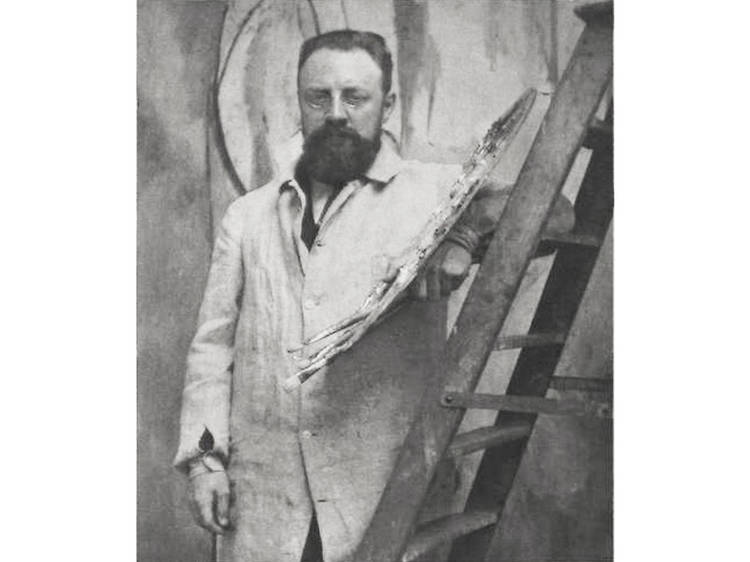
14. Henri Matisse
No artist is as closely tied to the sensual pleasures of color as Henri Matisse. His work was all about sinuous curves rooted in the traditions of figurative art, and was ever focused on the beguiling pleasures of pigment and hue. "I am not a revolutionary past principle," he in one case said. "What I dream of is an art of residue, of purity and tranquillity, devoid of troubling or depressing subject matter…a soothing, calming influence on the listen, something like a good armchair."
Henri Matisse, Paris, May 13th, 1913
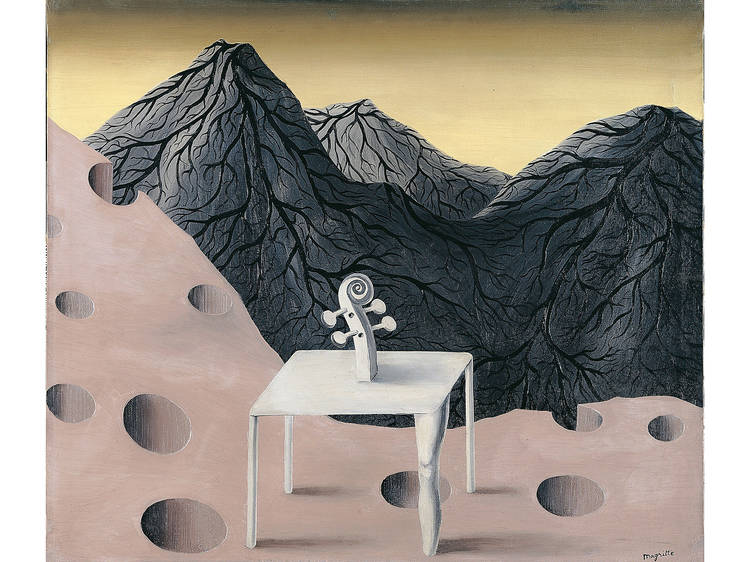
fifteen. Rene Magritte
The name René Magritte is widely recognized by art lovers and agnostics akin, and for good reason: He utterly transformed our expectations of what is real and what is non. When someone describes something as "surreal," the chances are good that an image by Magritte pops into his or her head.
Magritte Rene, The Roof of the Earth, 1926-1927
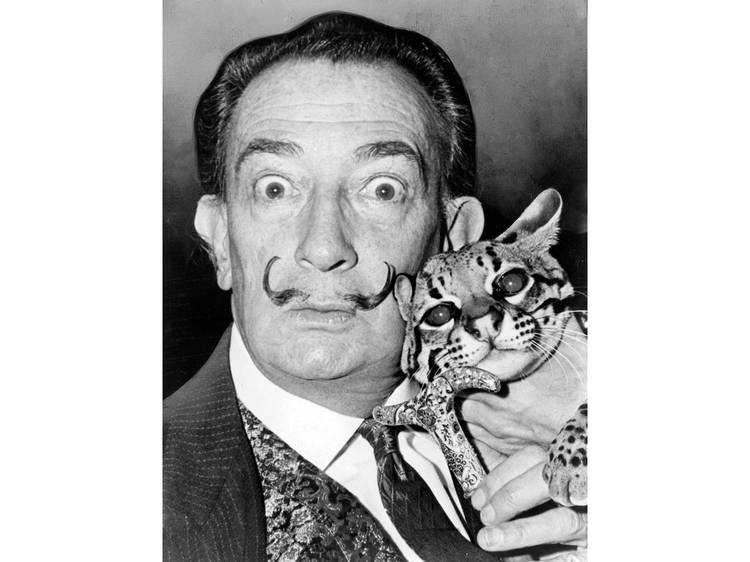
xvi. Salvador Dalí
Dalí was effectively Warhol before there was a Warhol. Similar Andy, Dalí courted celebrity almost as an adjunct to his piece of work. With their melting watches and eerie blasted landscapes, Dalí's paintings were the paradigm of Surrealism, and he cultivated an every bit outlandish appearance, wearing a long waxed mustache that resembled true cat whiskers. Ever the consummate showman, Dalí one time declared, "I am non foreign. I am just not normal."
Salvador Dalí with Babou, the ocelot and cane, 1965

17. Georgia O'Keeffe
Georgia O'Keeffe's reputation rests in part on the idea that many of her paintings evoke a certain function of the female anatomy. O'Keeffe herself angrily rejected the notion that her compositions—specially her floral studies—were symbolic representations of vaginas, simply the idea has stuck. However, there and then much more than to the artist'due south work, which could be described equally a blend of symbolism, precisionism and brainchild.
Georgia O'Keeffe, 1918

18. Edward Hopper
Hopper'due south enigmatic paintings look into the hollow core of the American experience—the alienation and loneliness that represents the flip side of to our religious devotion to individualism and the pursuit of an often-elusive happiness. In compositions such as Nighthawks, Automat and Part in a Minor Urban center, he captures stillness weighed downward past despair, his subjects trapped in the limbo between aspiration and reality. His landscapes are similarly suffused with a sense that America's open spaces are as purgatorial as they are limitless.
Edward Hopper, Cocky Portrait, 1906
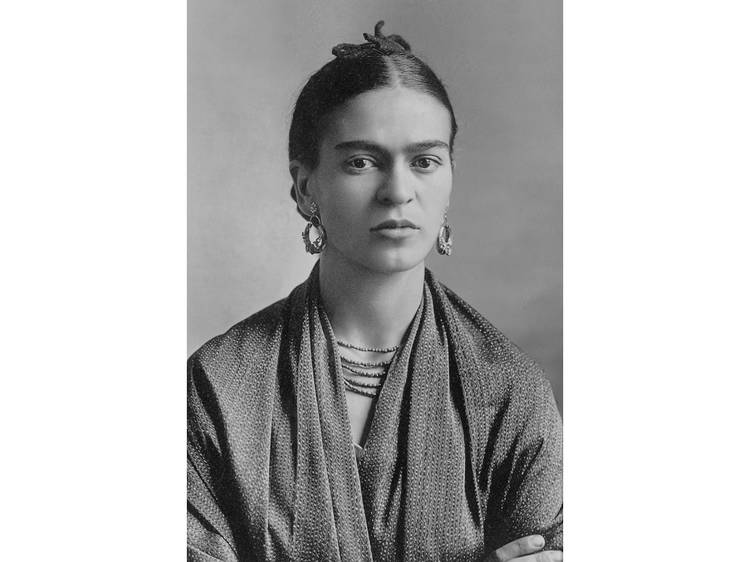
19. Frida Kahlo
The Mexican artist and feminist icon was a performance artist of paint, using the medium to lay bare her vulnerabilities while too constructing a persona of herself as an embodiment of Mexico's cultural heritage. Her most famous works are the many surrealistic self-portraits in which she maintains a majestic bearing even as she casts herself every bit a martyr to personal and physical suffering—anguishes rooted in a life of misfortunes that included contracting polio equally a child, suffering a catastrophic injury as a teenager, and indelible a tumultuous marriage to boyfriend artist Diego Rivera.
Frida Kahlo, 1932

xx. Jackson Pollock
Hampered past alcoholism, self-doubt and clumsiness as a conventional painter, Pollock transcended his limitations in a brief but incandescent period between 1947 and 1950 when he produced the drip abstractions that cemented his renown. Eschewing the easel to lay his canvases fait on the flooring, he used business firm paint directly from the can, flinging and dribbling thin skeins of pigment that left behind a concrete tape of his movements—a technique that would become known as activeness painting.
Jackson Pollock, Reflection of the Large Dipper, 1947
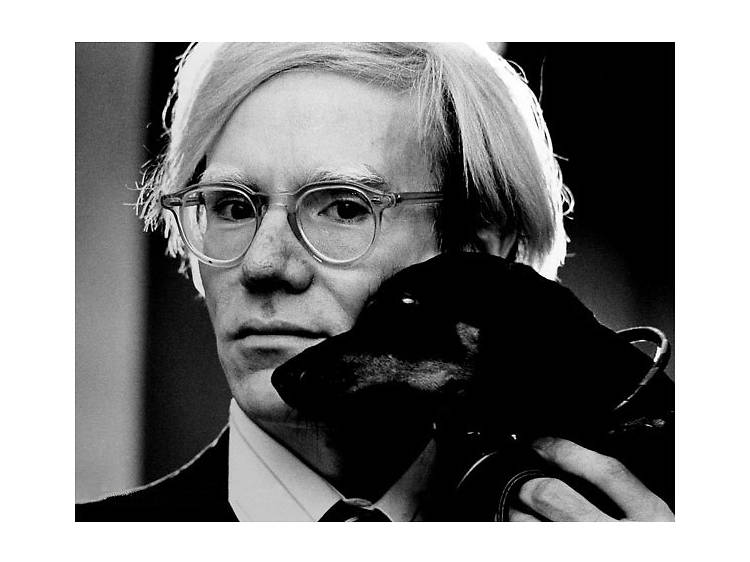
21. Andy Warhol
Technically, Warhol didn't invent Pop Art, but he became the Pope of Pop past taking the style out of the art earth and bringing it into the world of fashion and celebrity. Starting out as a commercial artist, he brought the ethos of advert into fine art, even going so far equally to say, "Making money is art." Such sentiments blew away the existential pretensions of Abstract Expressionism. Although he's famous for subjects such as Campbell'south Soup, Marilyn Monroe and Elvis Presley, his greatest creation was himself.
Andy Warhol
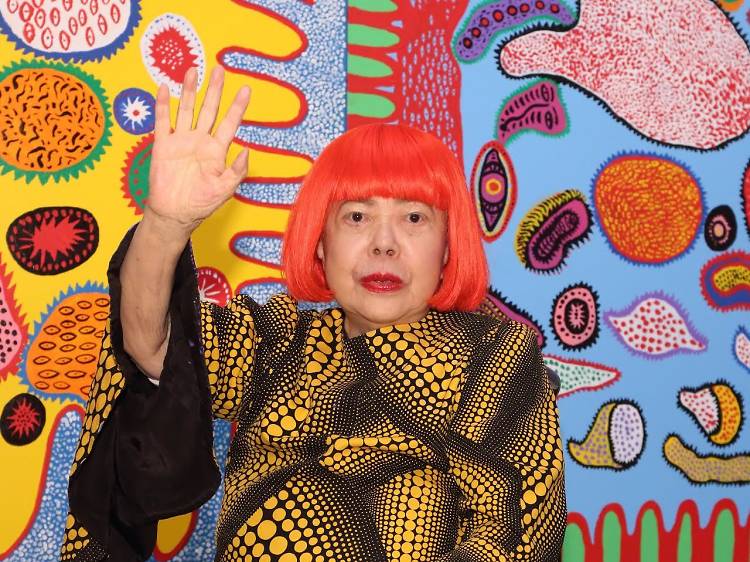
22. Yayoi Kusama
Kusama (born 1929) is i of the about famous artists working today. Her huge popularity stems from her mirrored "Infinity Rooms" that have proved irresistible for Instagram users, but her career stretches dorsum over six decades. Starting as a child, the Japanese artist began to suffer from hallucinations that manifested as flashes of light or auras, as well as fields of dots and flowers that talked to her. These experiences have provided the inspiration for her work, including the same rooms along with paintings, sculptures and installations that employ brilliant, phantasmagorical patterns of polka dots and other motifs. Betwixt 1957 and 1972, she lived in NYC, where she gained notoriety for chairs upholstered with stuffed-fabric phalluses, as well every bit outdoor happenings that involved public nudity. Her psychological afflictions, though, accept connected to plague her, and in 1977, she committed herself to mental hospital in Nippon where she'southward lived ever since.
Looking for more renowned art?
An email you'll actually love
🙌 Crawly, you're subscribed!
Thanks for subscribing! Expect out for your commencement newsletter in your inbox soon!
Source: https://www.timeout.com/newyork/art/most-famous-artists-of-all-time
0 Response to "Art Work Persons Name in the Center With Things That Makes the Unique Surrounding the Name"
Post a Comment